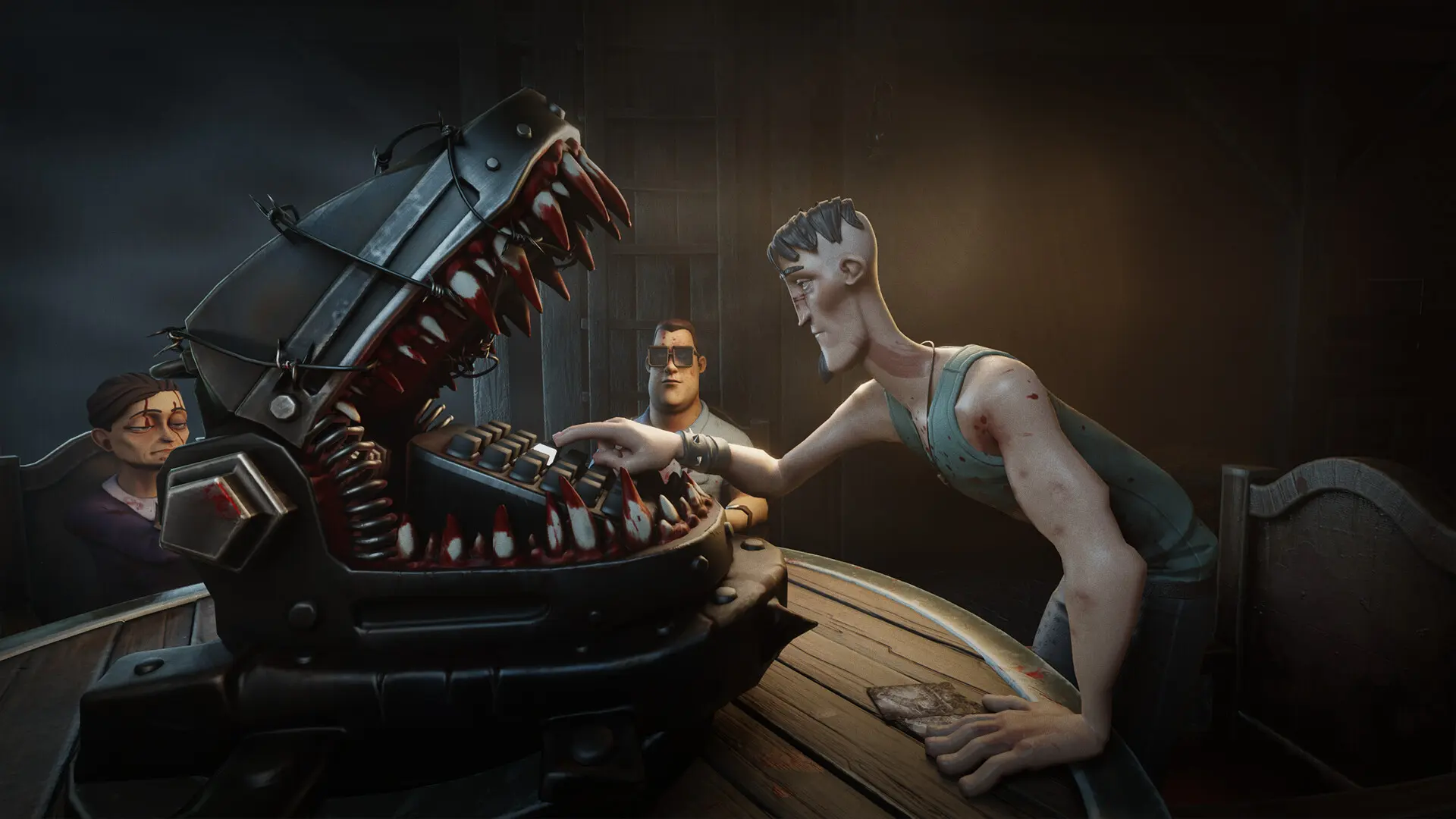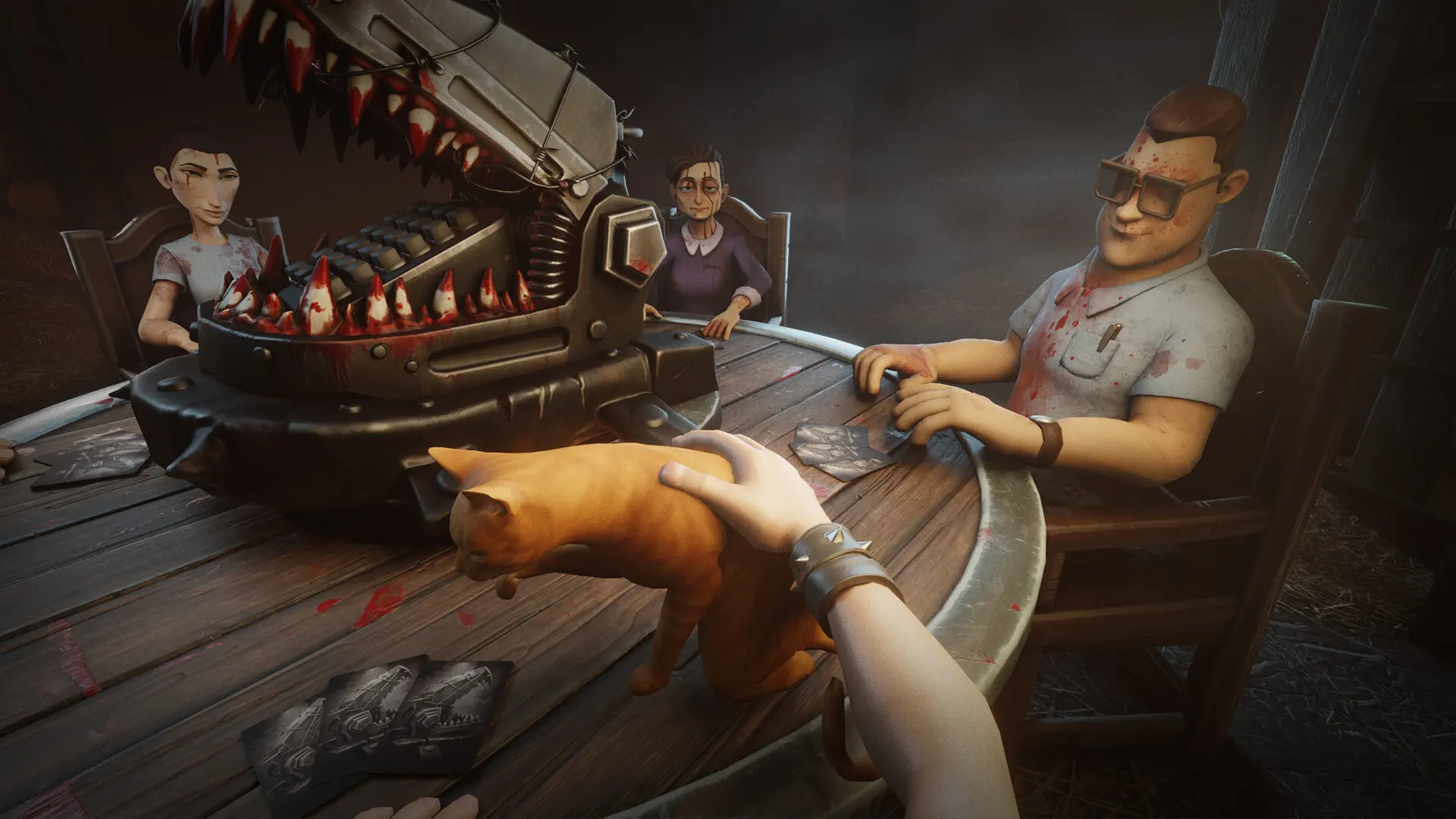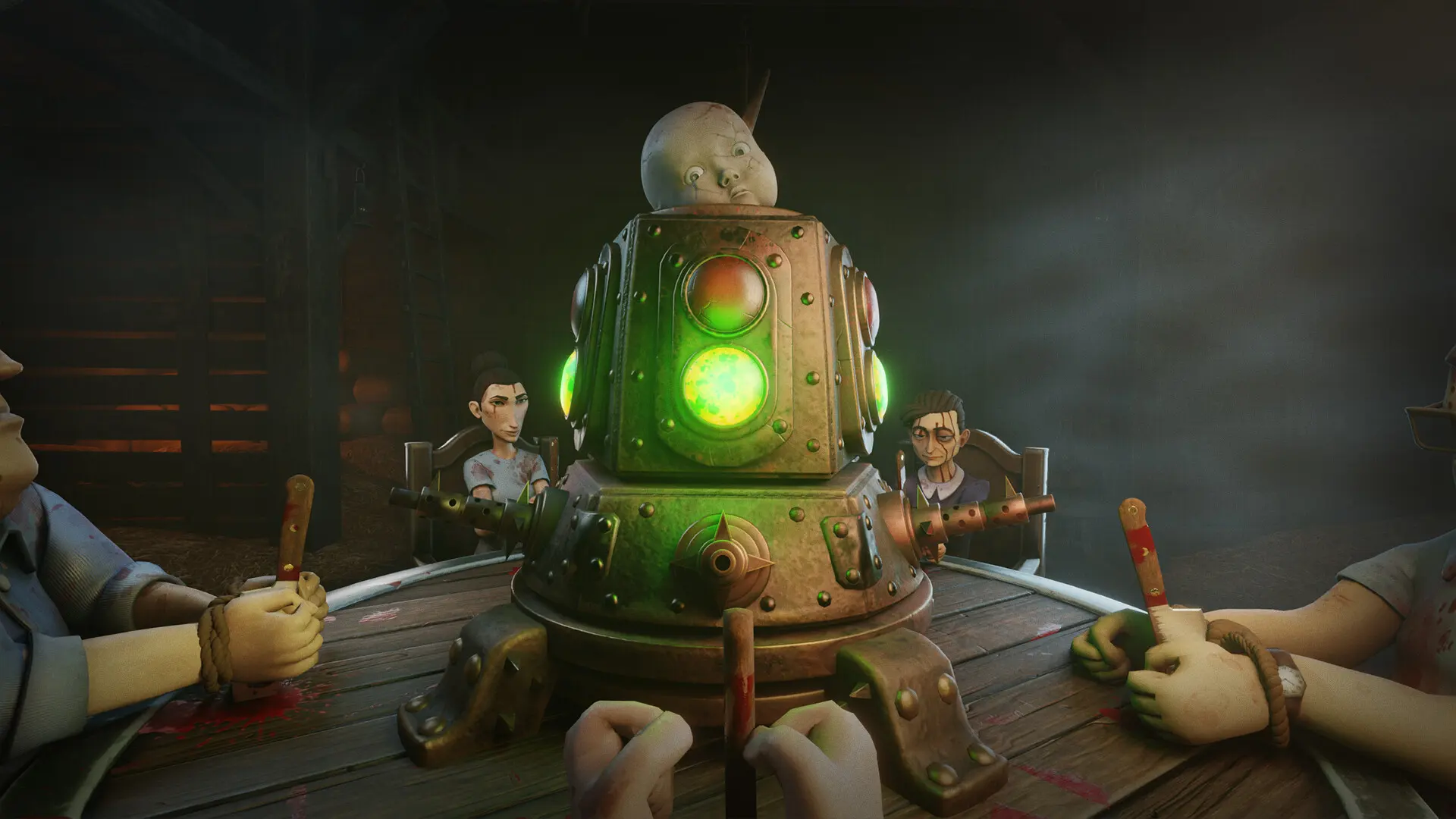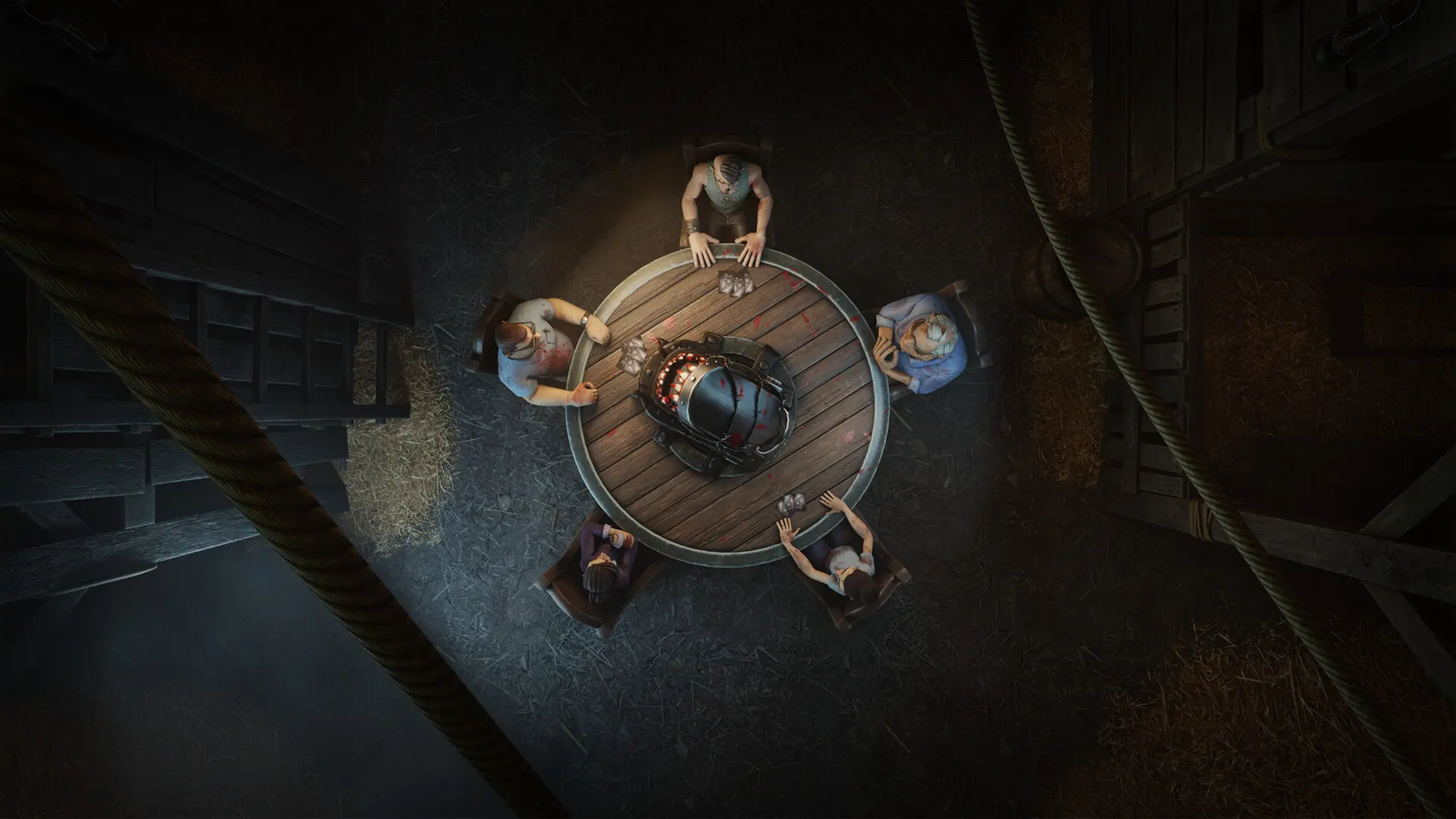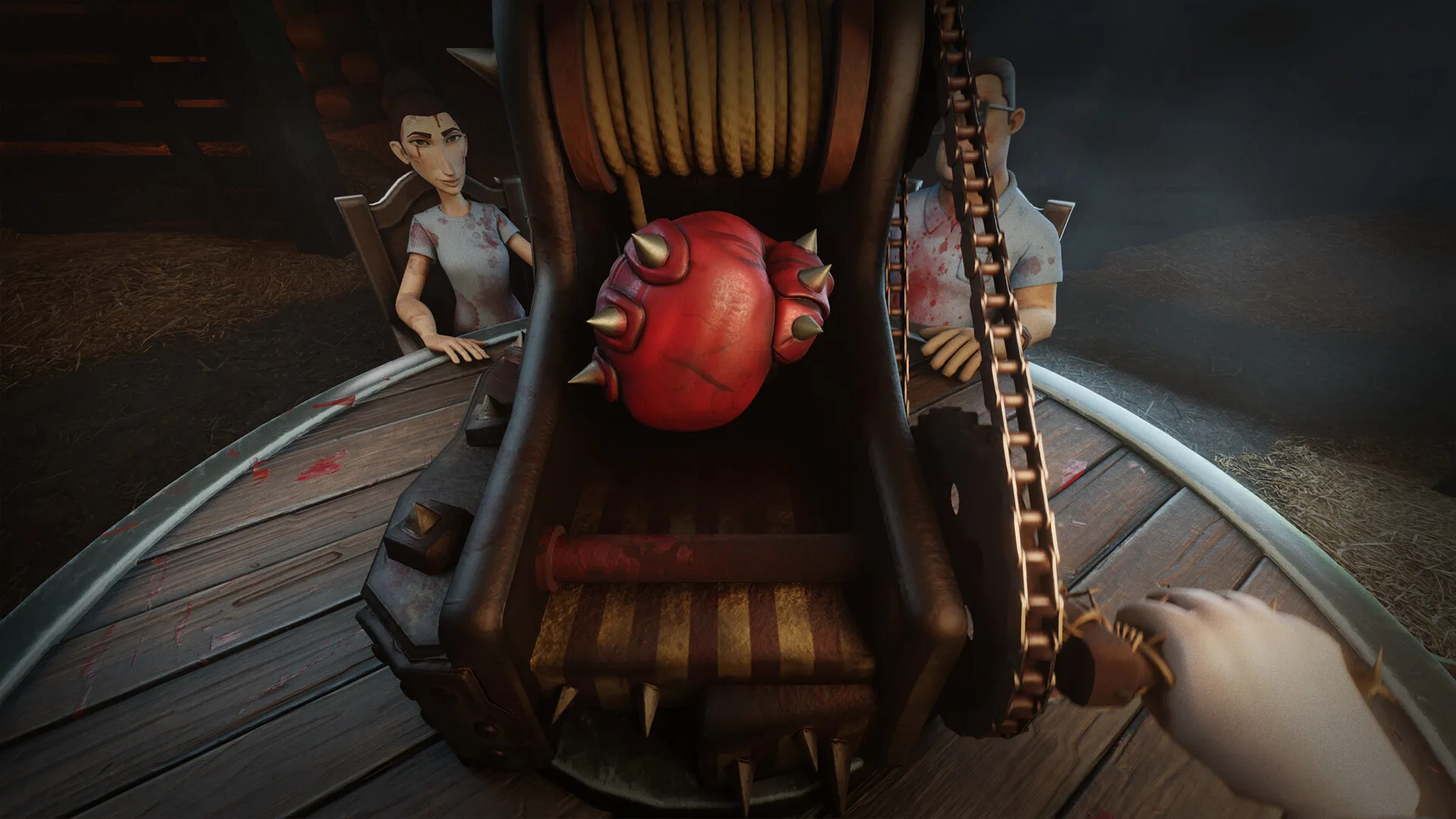
HANDS OVER is easy to understand and hard to play well. The rules fit on a card: take a seat, press a tooth, play an influence card, try not to be the one who runs out of luck. The difficulty is other people.
This guide is for your first session. It covers the turn flow, the habits that matter, the mistakes that are easy to avoid, and what to practice in the demo before spending money.
The 60-second version
- The goal is to outlast the table, not to cooperate. The last player left wins.
- A bad move can cost a hand or knock you out of a round. Losing a hand does not eliminate you from the match.
- Influence cards are played between turns. They can change odds, protect you, sabotage someone else or trigger chaos.
- The tooth device is a press-your-luck challenge. One tooth is wrong; the official rules do not publish a safe pattern.
- The social read matters as much as the device. Bluffing, pressure and table politics are part of the design.
How a turn works
ArtDock has not published a formal rulebook, but the official descriptions support this sequence. Treat it as the confirmed skeleton, not a frame-by-frame ruleset.
- The table is set. Up to five players are seated online. A challenge device and cards are on the table.
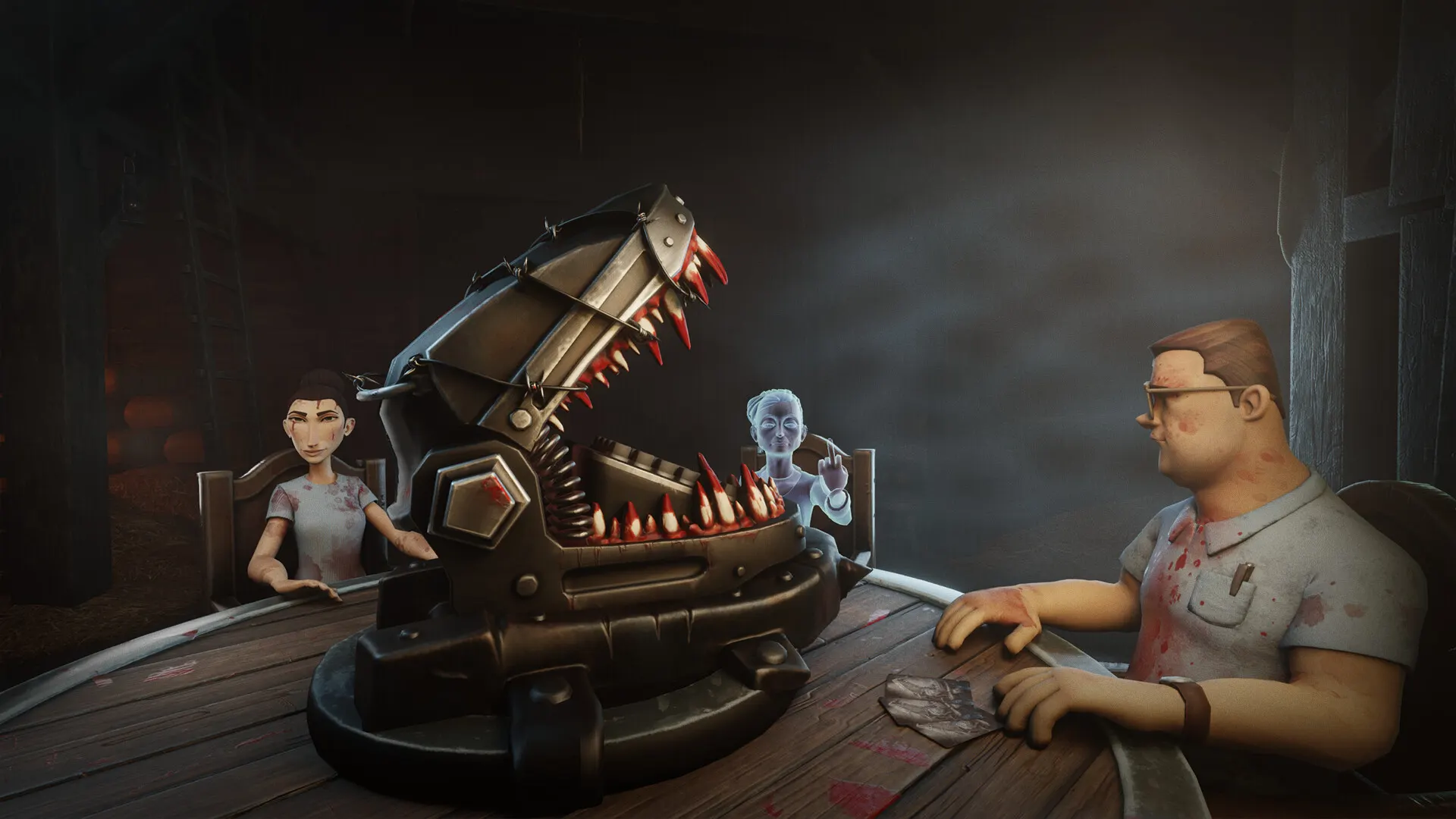
- A player takes the challenge. In the tooth device, the player presses teeth one by one. One tooth is the wrong one. The action is first person; the other players watch.
- The consequence lands. A wrong press can cost a hand, knock the player out of the round, or shift the match balance. The punishment is visible.
- Cards come between turns. Influence cards can change the odds, protect the holder, sabotage an opponent or trigger a chaotic event.
- The table shrinks. Players lose their place one by one. The last one left wins.
The unclear parts are important: when exactly a card can be played, how many hands a player has, whether the device resets, and how a match is timed. Do not build a strategy around a number you have not seen in the game or in an official post.
Five habits that matter
1. Treat every tooth as live
The official description says one tooth is the wrong one. It does not publish a pattern, a tell or a guaranteed safe sequence. If the device gives you no reliable information, “this one looks safe” is a feeling, not a fact.
The practical habit: make a decision, commit to it, and watch how the table reacts. Hesitation is information for everyone else. If you have a genuine reason to suspect a tooth — a card, a reaction, a previous round — use it. If not, do not invent a system and then trust it with your hand.
2. Spend cards on leverage, not panic
Influence cards can protect, sabotage, change odds or create chaos. The exact values are unknown, which makes panic-spending the most expensive mistake. A card burned because you were nervous is a card that cannot answer the next threat.
A useful default: hold a card until it changes a decision that matters. If playing it only makes a bad situation slightly less bad, the card may be worth more later. If it can redirect a consequence onto someone else, or protect you from a known threat, that is leverage.
This is analysis, not a rule. The game may reward fast card play in ways the public description does not show.
3. Track who benefits
Every card play changes the table’s incentives. Ask three questions:
- Who played the card?
- Who benefits if the next challenge fails?
- What does the play tell you about that player’s hand or plan?
You do not need a spreadsheet. You need a habit: after each card, name the beneficiary out loud or in your head. Players who consistently benefit from “random” chaos are not lucky; they are playing the table.
4. Hand loss changes your strategy, not your status
ArtDock explicitly said that losing a hand does not mean you are out of the game. That changes the emotional read. A player who loses a hand is not eliminated; they are wounded, and possibly more dangerous because they have less to protect.
Do not write off a one-handed player. Do not assume they are safe, either. The confirmed rules do not explain how many hands a player has, whether the loss is permanent, or what happens when the last hand is gone. Watch the UI and the official updates rather than assuming a health bar.
5. Target the leader, not the loudest
The last player left wins, so the current leader is the real threat. The loudest player may be a distraction, a bluff or a trap. If the table lets the leader coast, everyone else is playing for second.
This is table politics, not a mechanical rule. It works because the game is competitive and because influence cards can redirect consequences. Use it carefully: an obvious pile-on can make you the next target.
Influence card timing
The store page says cards are used between turns. The exact timing window is not documented. That leaves three practical questions for your first session:
- Can a card be played after a challenge is declared but before the result? If yes, reaction cards gain value. If no, protection must be set up earlier.
- Can a card target a player who is not currently taking a turn? If yes, table pressure becomes a long game. If no, timing is everything.
- Can a card be played in response to another card? If yes, holding a card is a threat. If no, the card economy is more about pre-commitment.
Until the game answers those questions, watch the UI and ask the table. Do not assume a “reaction” card works like a reaction in a different card game.
Table talk without overdoing it
Bluffing is part of the design. The store page says a bluff can throw players off, and a desperate player can turn the table against someone else. That makes communication a mechanic, even if the game does not have a formal negotiation phase.
Three habits:
- Ask for information you can verify. “Who played the last card?” is better than “Who is lying?”
- Do not over-explain your own move. The table learns from what you defend.
- Call out the beneficiary, not the personality. “That card helped you” is harder to deflect than “You’re acting suspicious.”
If you are playing with friends, agree before the session that table talk is part of the game. If you are playing with strangers, keep it playful and avoid personal pressure. The game is about suspicion; it does not need to become a real argument.
Common beginner mistakes
- Assuming a hand loss is elimination. It is not. Keep playing.
- Burning cards in the first round. The card pool is limited and the full rules are unknown.
- Trusting a “safe tooth” pattern. No official pattern has been published.
- Treating the game as co-op against the device. The other players are the variable.
- Ignoring the leader. The last player left wins; the leader is the threat.
- Playing without voice chat. The game can be played silently, but the social layer is the point. Use Discord if in-game voice is not available.
- Assuming five players are required. The game supports up to five; the minimum player count has not been published.
First-match checklist
- Install the free demo and check that it launches.
- Use headphones and a microphone if you can. The game is about reading people.
- Read the mature-content note: stylized blood, hand injury and a dark atmosphere.
- Decide who hosts and how you will communicate.
- Agree on a session length. The match timer is not public.
- Read every influence card before the first challenge.
- Expect the first round to be messy. The goal is to learn the table, not to win cleanly.
What to practice in the demo
- Risk calibration. Notice how you feel before pressing a tooth. Are you rushing, freezing or blaming the device?
- Card discipline. Try holding a card for one full turn. Does the table notice? Does it change how they treat you?
- Social reads. Pick one player and track who benefits from their plays. Do it without announcing it.
The demo is a limited slice, but it is the only official way to practice the loop before launch. The demo guide covers installation and group finding.
What changes after launch
This guide will be revised when ArtDock publishes the full rules, card list, challenge roster or a 1.0 build. The core habits — track the beneficiary, do not panic-spend, treat every tooth as live, and do not confuse a hand loss with elimination — are built on confirmed design intent and should survive balance changes.
For the card system specifically, see what influence cards do. For the device list, see challenges and devices. For player count and crossplay, see multiplayer.