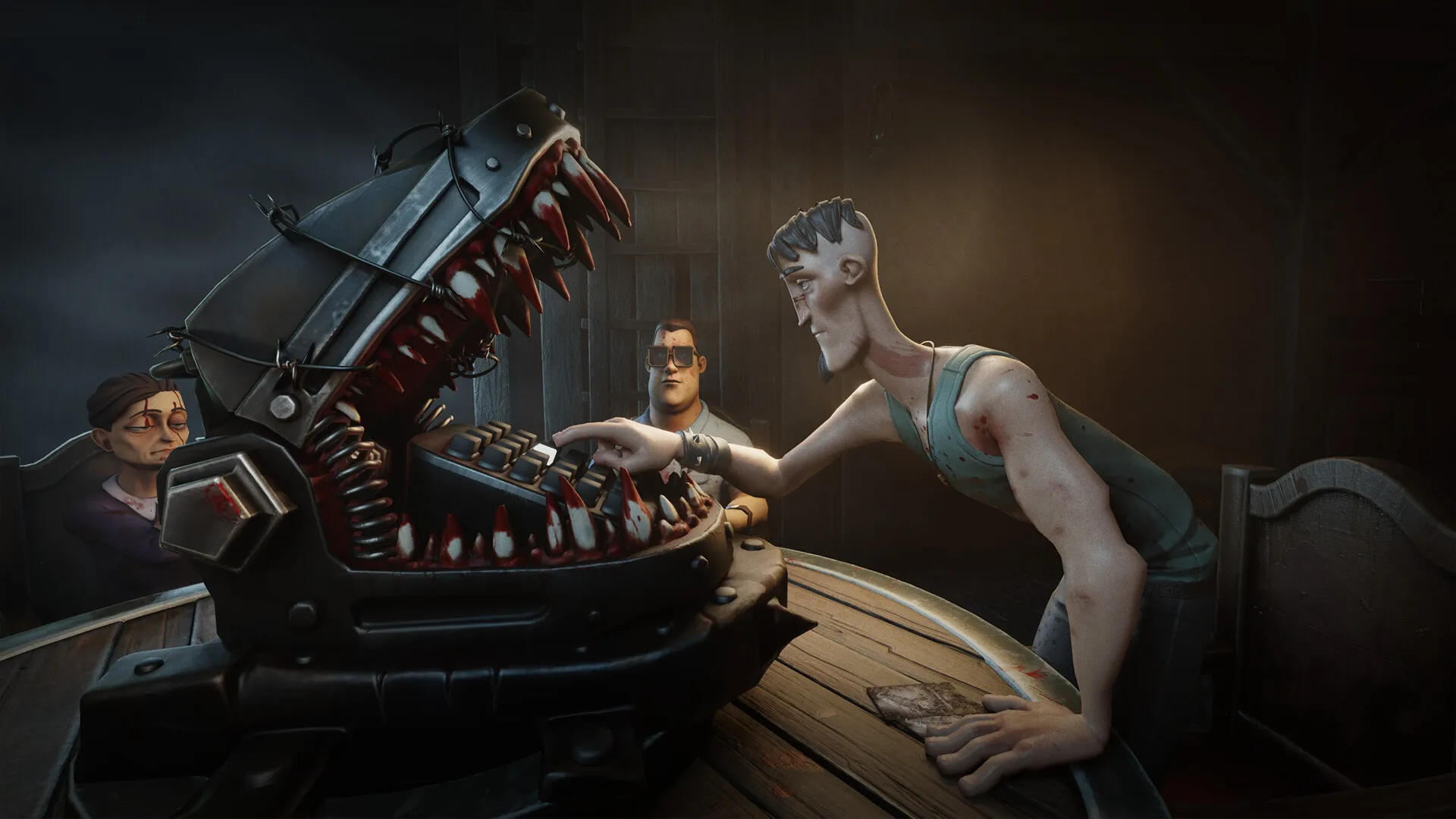
HANDS OVER is a first-person multiplayer horror game from ArtDock, the Moldovan studio also known for SOS OPS! and Penguin Helper. Up to five players sit around a table, take turns on a dangerous device, and use influence cards to bend the odds. The last player left at the table wins.
That summary is short because the game is deliberately readable. The tension comes from what happens between the rules: who pressures whom, who spends a card, and who is quietly hoping someone else presses the wrong tooth.
This overview sticks to information ArtDock has published. Where the studio has not explained a system, the gap is labeled rather than filled with guesswork.
Quick facts
| Item | Confirmed detail |
|---|---|
| Developer / publisher | ArtDock |
| Genre | Horror party game, card game, multiplayer |
| Perspective | First person |
| Players | Up to five, online |
| Steam modes | Online PvP and online co-op tags |
| PC release | November 13, 2026, Steam Early Access |
| PC OS | Windows 10/11 |
| Console versions | PlayStation, Xbox and Nintendo Switch announced; no dates |
| Price | Not announced; a launch discount is confirmed |
| Early Access estimate | Roughly 6–12 months |
| Demo | Free on Steam since October 15, 2026 |
| Interface languages | 19 listed on Steam, including English and Simplified Chinese; no full audio or subtitle columns are listed |
The release date, platforms and Early Access details are covered in more depth on the release page. This page is about the game itself.
The premise: a cruel show
ArtDock describes players as people trapped in a cruel show. They take their seats and face warped versions of games that once seemed harmless. The rules are simple; the pressure is not.
The official store page puts it this way:
This is not a kids’ game anymore.
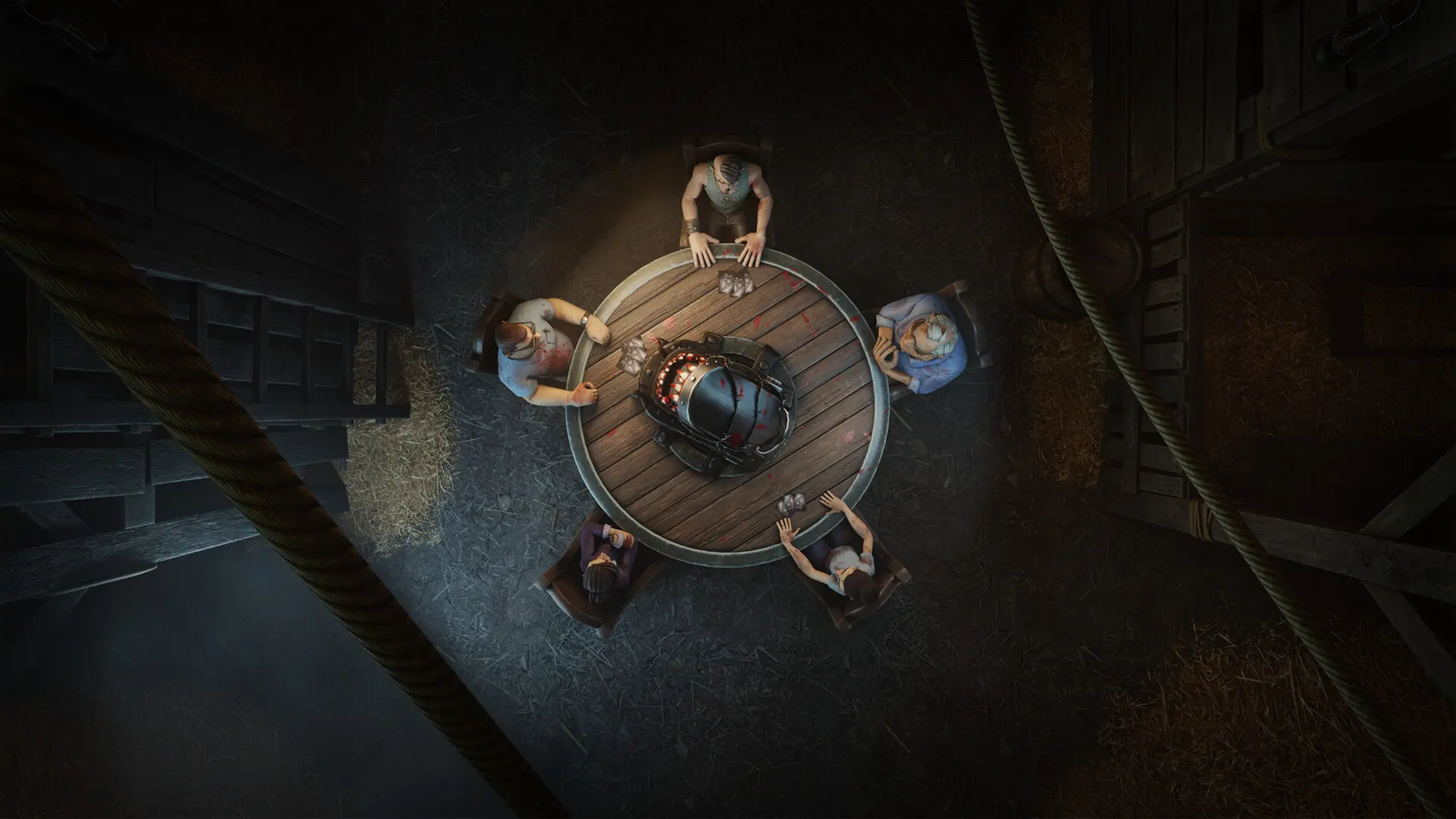
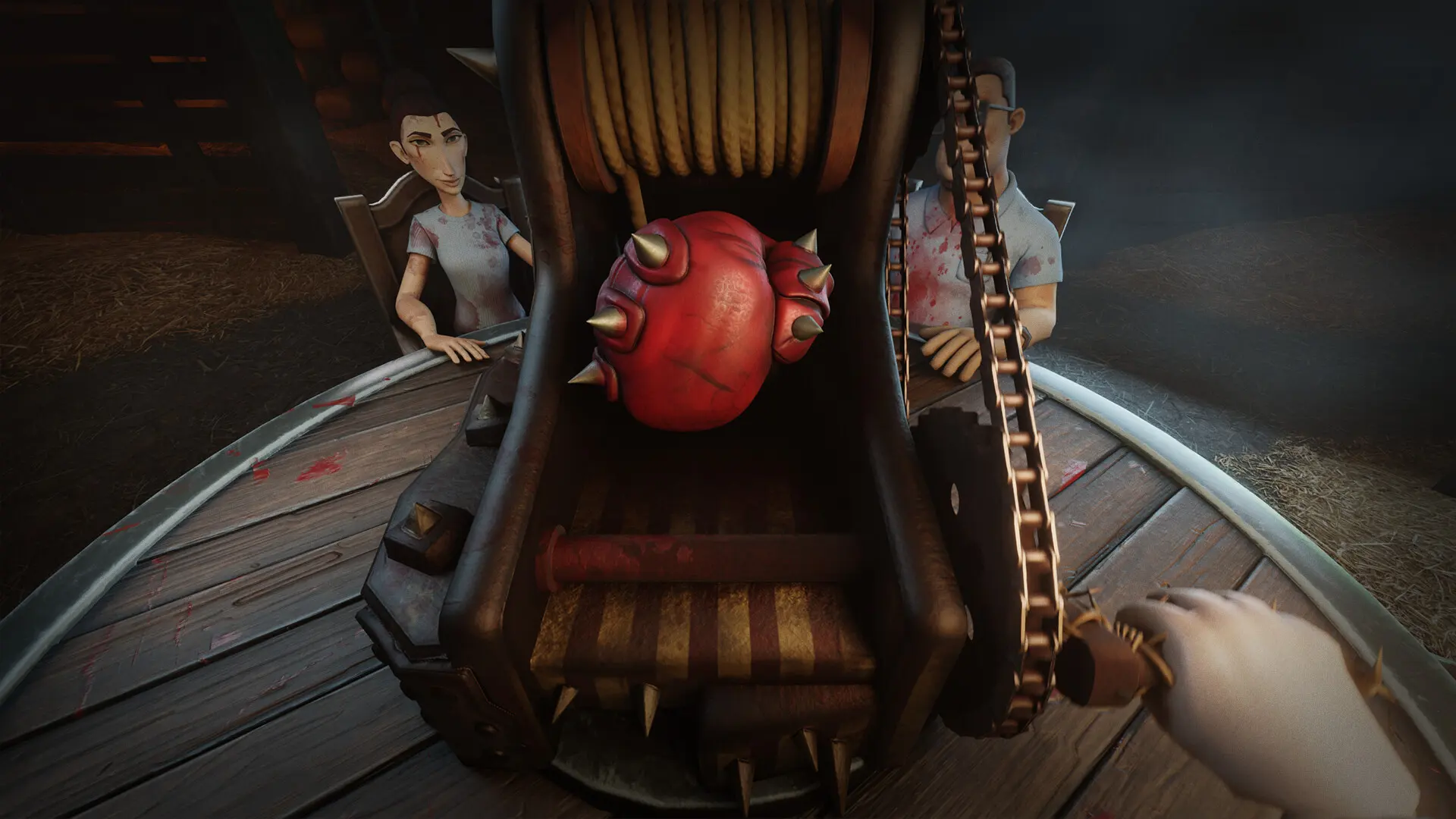
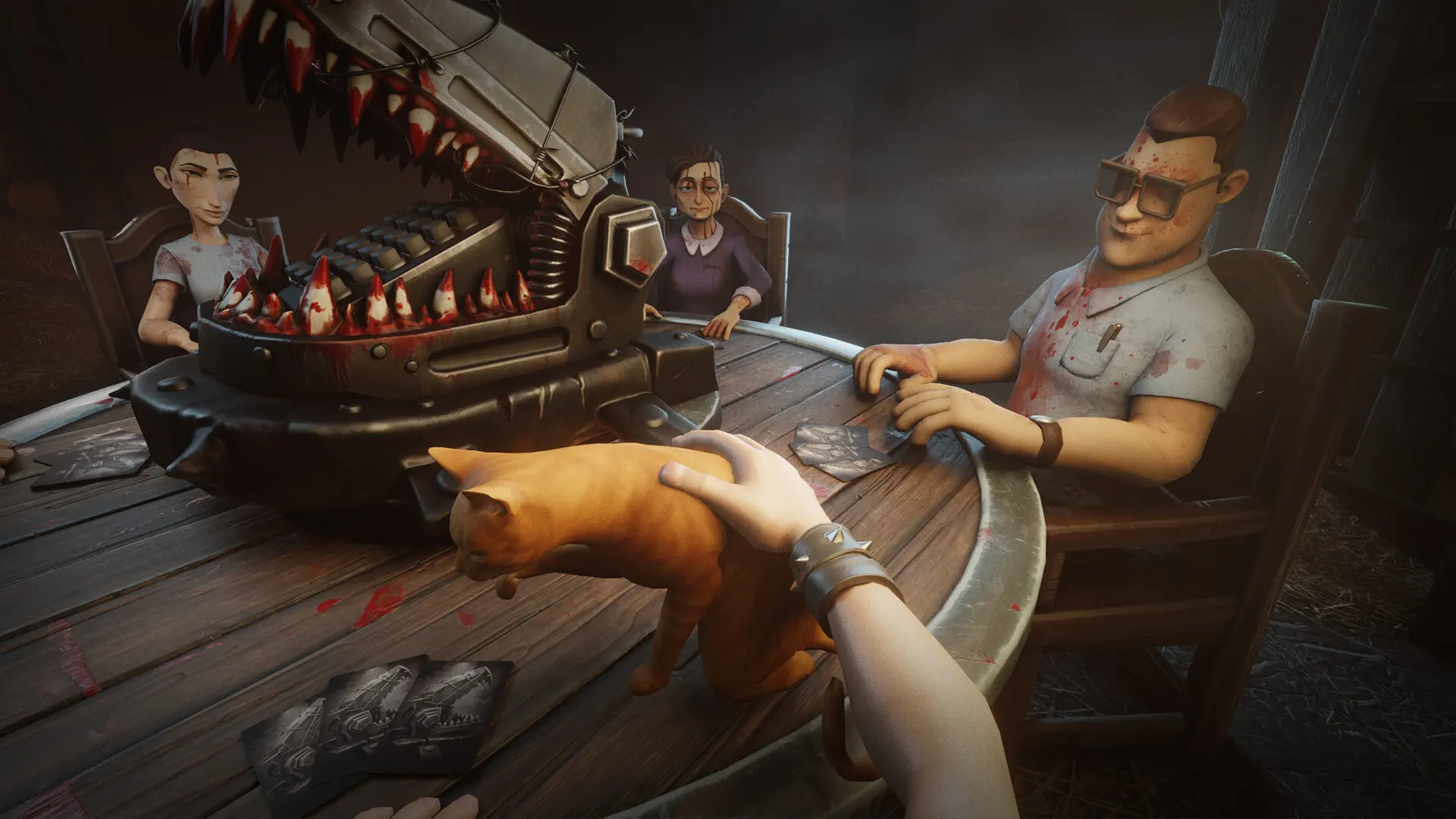
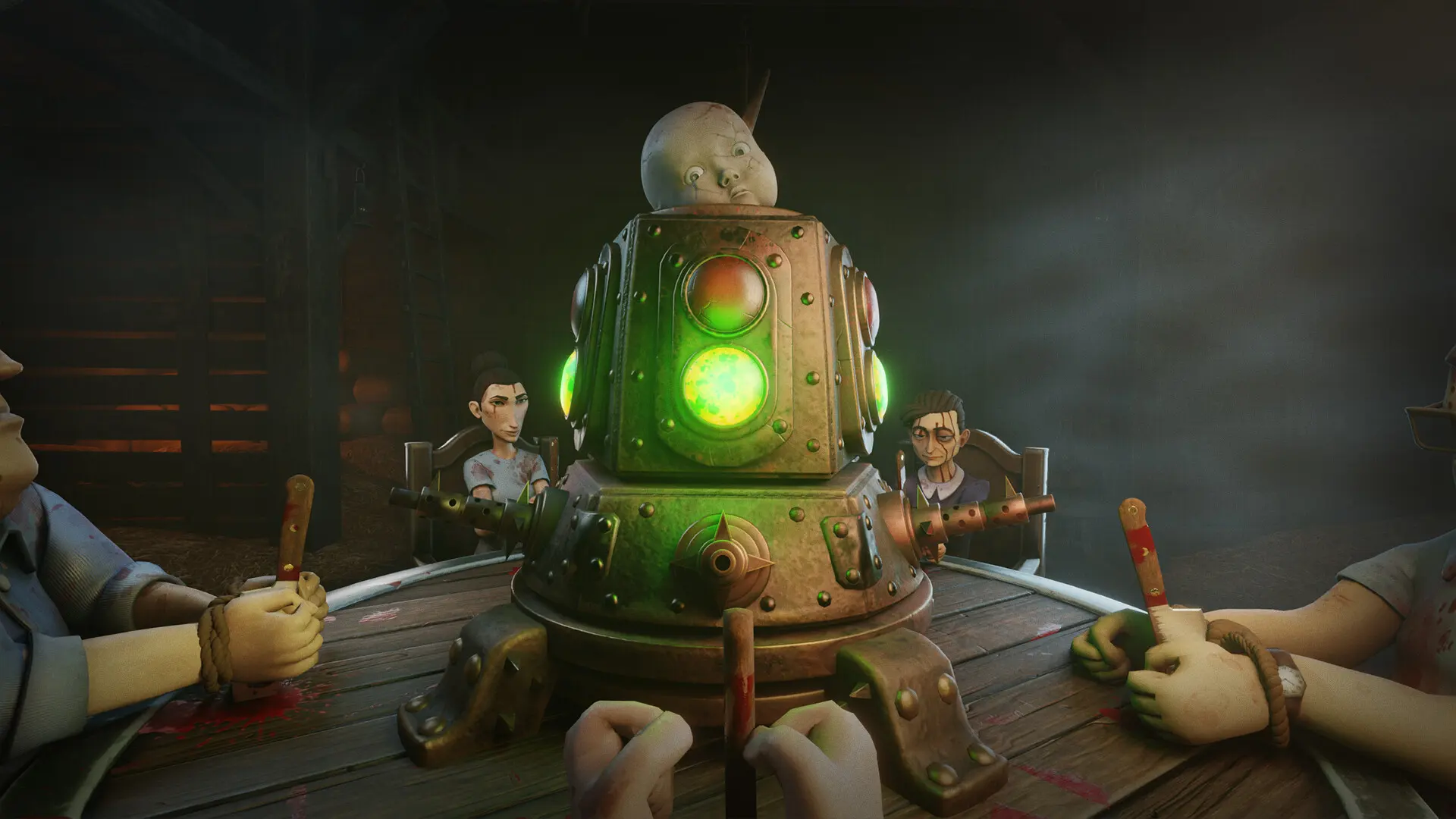
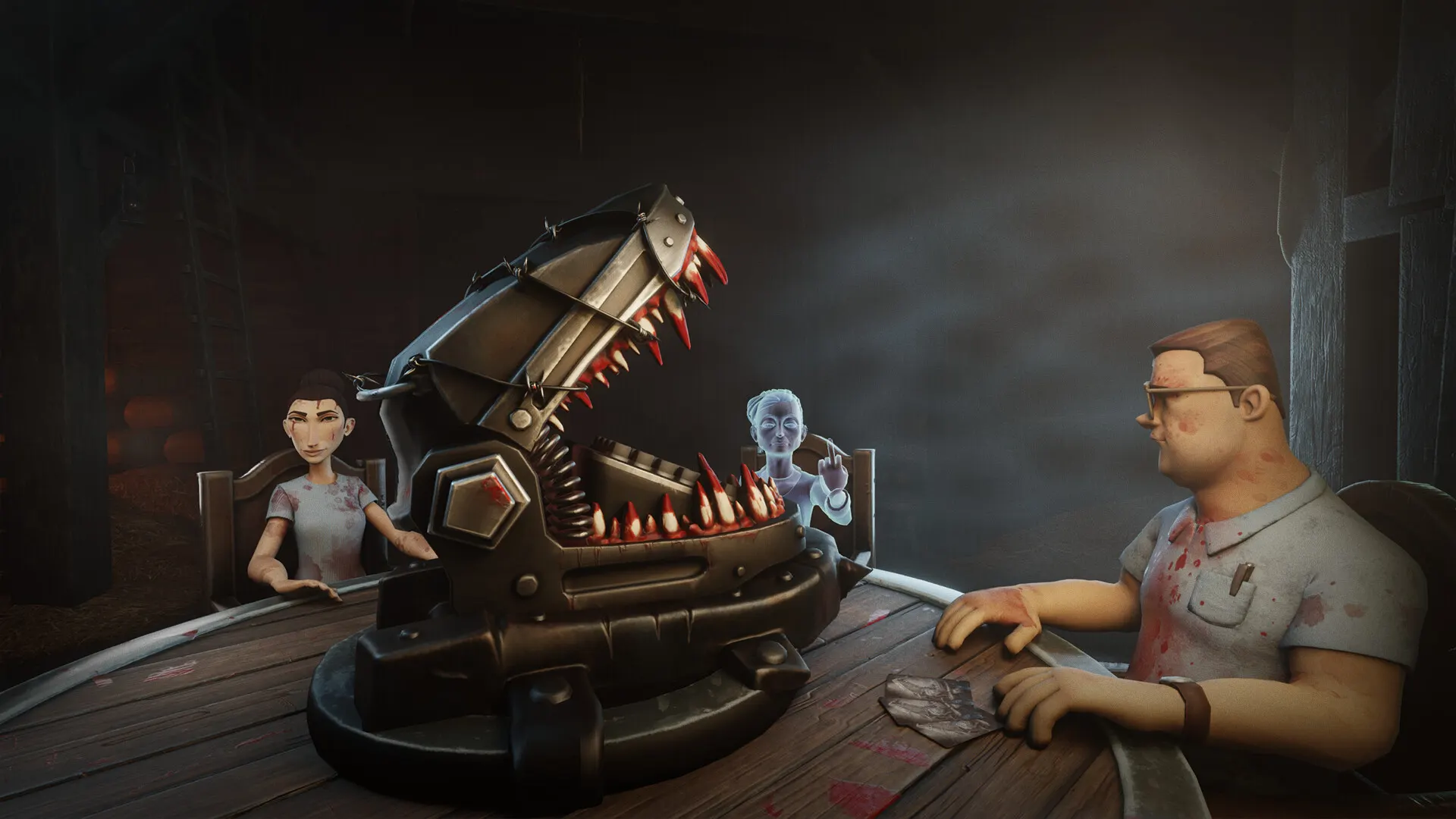
The visual language follows that idea. Official screenshots show a dark, barn-like room, rough wooden tables, straw, bloodstained props and oversized mechanical devices. The characters are stylized and exaggerated rather than realistic. The horror is staged: a childhood toy scaled up into something industrial, with a person on the other side of it.
IGN’s announcement coverage quoted game designer Grigory on the design intent:
We wanted players to recognize the games immediately, laugh at first, and then realize they are genuinely afraid to take their turn. The mechanics are simple, but the tension between players is what makes every round feel dangerous.
That quote is useful because it explains the target experience without pretending the game is a story-driven horror campaign. HANDS OVER is built around a repeated social loop, not a plot you progress through.
The match loop
ArtDock has described the core loop in fragments across the store page, demo page and announcements. Assembled in order, it looks like this.
- Take a seat at the table. A session supports up to five players online. The table is the fixed point: players, cards and a challenge device share the same frame.
- Face a challenge on your turn. The clearest confirmed example is the tooth device. Players press teeth one by one, and one of them is the wrong one. The device is operated in first person while the rest of the table watches.
- Use influence cards between turns. Cards can change the odds, protect their holder, sabotage opponents, or trigger chaotic events. A safe-looking move can become a disaster in seconds.
- Absorb the consequence. A bad move can cost a hand, knock a player out of the round, or shift the balance at the table. The punishment is meant to be visible and shareable.
- Stay longer than everyone else. Players lose their place at the table one by one. The last one left wins.
The exact round structure, match timer and number of challenges per session are not public. Neither is the full device list. Those are structural details, not small ones, so this site does not present a made-up “full ruleset.”
Co-op or competitive?
The marketing calls HANDS OVER a “5-player co-op horror game,” and Steam lists both online co-op and online PvP. That sounds contradictory until you separate the session from the goal.
The players share a table and a match, but they are not working toward a common win condition. The official description is explicit: players sabotage each other, and the last one left gets to smile. The safest description is a competitive survival party game played in a shared online session. “Co-op” describes the social setting and the need to fill a five-player lobby, not a promise that everyone wins together.
This matters for expectations. If you want a game where the group cooperates against a monster, HANDS OVER is not that. If you want a game where the group creates its own monster, it is much closer.
What failure actually costs
A common assumption before launch was that losing a hand meant losing the match. ArtDock corrected that directly in its October 12 announcement: losing a hand does not mean you are out of the game.
What is confirmed:
- A bad move can cost a hand.
- It can also knock you out of the round.
- It can shift the balance at the table and turn the match against you.
- The punishment is visible and designed for reaction and replay.
What is not confirmed:
- How many hands a player has, or whether the loss is permanent for the match.
- Whether a player can be eliminated from the entire match, and by what condition.
- How recovery, if any, works.
- Whether the device resets between rounds.
Those gaps are why a beginner guide has to be careful. Advice such as “protect your last hand” sounds plausible, but the number of hands is not public. The better habit is to treat every mistake as costly without assuming you know the exact economy.
The room, the table and the tone
The official screenshots are consistent about the setting: a dark room with wooden beams, straw on the floor, blood on the table, and characters who look like they walked out of a stop-motion horror short. The devices are the visual anchors. A giant tooth trap. A green-lit machine ringed by knives. Cards spread across the wood.
ArtDock describes “dark, oppressive rooms, among cruel devices, uneasy characters.” It also says the focus is always clear: the table, the players, the device and the next terrible decision. That focus is why the game reads well in screenshots and streams. The camera is not wandering through a haunted house; it is pinned to the consequence.
The setting does not yet have a published location name, lore page or map. If you see a detailed “HANDS OVER map” or “location guide” elsewhere, check whether it cites ArtDock. This site will add location coverage only when the game provides real locations to document.
What HANDS OVER is not
A few things are worth ruling out before the release:
- Not a single-player horror story. No solo mode has been announced, and Steam does not list a single-player category.
- Not a local party game. Steam lists online play; no local co-op or split-screen mode has been announced.
- Not a deckbuilder with a published card pool. Influence cards are a core system, but ArtDock has not released card names, costs or deck rules.
- Not a completed 1.0 release. November 13 is an Early Access launch, with roughly 6–12 months of planned development.
- Not a confirmed crossplay game. PC and console versions are announced, but crossplay has not been addressed.
Each of those points has a dedicated page or FAQ answer. The point here is that the game’s identity is narrower and more specific than the genre labels suggest.
Release status
HANDS OVER enters Steam Early Access on November 13, 2026. The date was originally October 30, 2026, then moved by two weeks for extra polish after Steam Next Fest. The console versions are announced but undated. The free demo has been available since October 15, 2026.
If you are deciding whether to play at launch, the Early Access page explains what ArtDock says is in the build and what is planned. If you want to try the table first, start with the demo guide.
Where to go next
- New to the game? Read the beginner’s guide.
- Want the card layer? Read what influence cards do.
- Want to know what is on the table? See the challenge and device breakdown.
- Need the date, platforms or price status? Use the release tracker.